Overview
Choosing a child bicycle seat begins with the adult bicycle, the child's readiness and the intended mounting location. BabyGearLab's review compares front-positioned Thule Yepp Mini and rear-positioned Yepp Maxi designs, but also identifies a generation change in the Maxi. That distinction should stay visible throughout a buying decision.
Separate the tested model from the current listing
The source states that its original Yepp Maxi has been replaced by Yepp 2 Maxi, which it had not yet tested in that comparison. Its observations about the older seat should therefore not be represented as a hands-on review of the newer version.
Write down the exact full model name, mounting variant and included bracket. Check the current Thule instructions for compatibility and requirements. Do not apply an older weight range, mounting detail or accessory assumption to a newer seat because the name is similar.
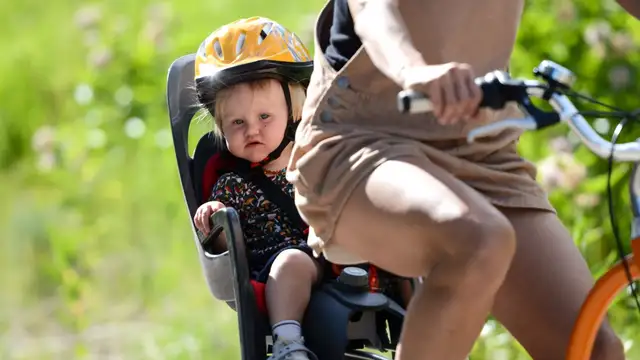
Front placement changes the riding space
The source describes the Yepp Mini as a smaller seat positioned behind the handlebars, with adjustable foot support and a locking attachment. Front placement may appeal to families wanting the child within easy conversational range, but the full riding position must be assessed.
Check the adult's steering clearance, posture, mounting and dismounting routine with an appropriate professional fitting or demonstration. A seat that appears to fit a bicycle frame still needs to work with the rider's body and normal controls.
Rear placement creates different checks
A rear-mounted arrangement places the child behind the adult. Confirm the exact frame- or rack-mount requirements, including any limitations for the particular bicycle. The seat, rack where applicable, bicycle and installation hardware must form an approved combination.
Evaluate the child's restraint and foot protection, as well as the adult's ability to support the bicycle during loading. A locking mechanism intended to deter theft is not a substitute for the complete attachment and pre-ride checks.
Plan the next stage without rushing this one
The source points out that the smaller front seat can have a shorter useful range than a rear arrangement. That may be acceptable for a family with a defined near-term plan, but the child's current fit and developmental requirements remain more important than anticipated longevity.
Mini and Maxi are useful starting concepts for a placement comparison, not universal fits. This article interprets BabyGearLab's older-model observations and makes no OwnBoy riding, impact or newer-generation performance claim.


Community comments
Be the first to share a useful experience or question.
Share your experience
Contributions are reviewed before publication. Do not share children's personal information.