Overview
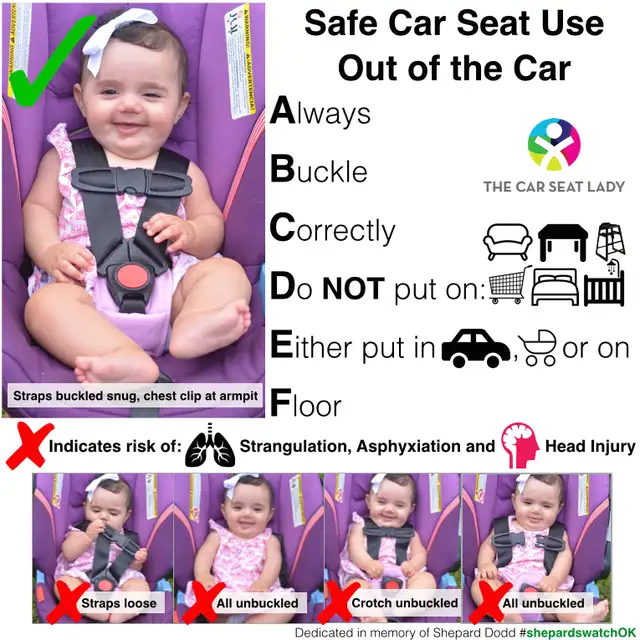
A detachable infant carrier moves through several settings in a single outing: vehicle, pavement, stroller and home. The Car Seat Lady's outside-the-car guidance emphasizes that the harness and the supporting surface still matter during these transitions. Treating the carrier as an all-purpose container can lead to shortcuts that are unrelated to its approved transport use.
Do not partly undo the harness
Keep the harness fastened and adjusted as instructed while the child remains in the carrier. Opening the crotch buckle while leaving another component fastened is not a comfortable halfway setting. The harness components are intended to work together. If the child needs to be removed, arrange a proper transfer rather than leaving a partially restrained child in the seat.
Make this clear when handing the carrier to another adult. A caregiver may assume that restraint rules apply only in the vehicle. Show that person the release sequence, the carrying-handle requirements and the plan for moving the baby out of the carrier at the destination. Familiarity with a different model does not establish the correct handle position or connection for yours.
Choose support that is actually intended for the carrier
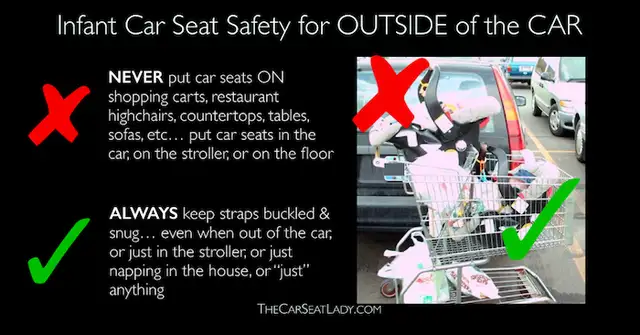
Use only an approved stroller connection with the correct adapters and locking procedure. Confirm engagement as directed before moving away. Do not balance the carrier on a counter, table, restaurant high chair or the upper part of a shopping cart. A surface that appears to hold the shell is not an approved attachment system.
Soft furniture is also unsuitable as a carrier stand. Putting the entire carrier on a sofa, bed or inside a crib does not create an appropriate infant sleep space. When a carrier is set down during a supervised transition, follow its instructions and keep it away from traffic, edges and other hazards. Plan the next step so that a temporary stop does not become an unattended stay.
Prepare for arrival
Have the intended sleep space or another appropriate place for the child ready before carrying bags inside. If the baby has fallen asleep during transport, arrange the transfer rather than using the carrier as the regular nap location. A lighter carrier or easy stroller release can help the caregiver, but product convenience should support that routine, not replace it.

Community comments
Be the first to share a useful experience or question.
Share your experience
Contributions are reviewed before publication. Do not share children's personal information.